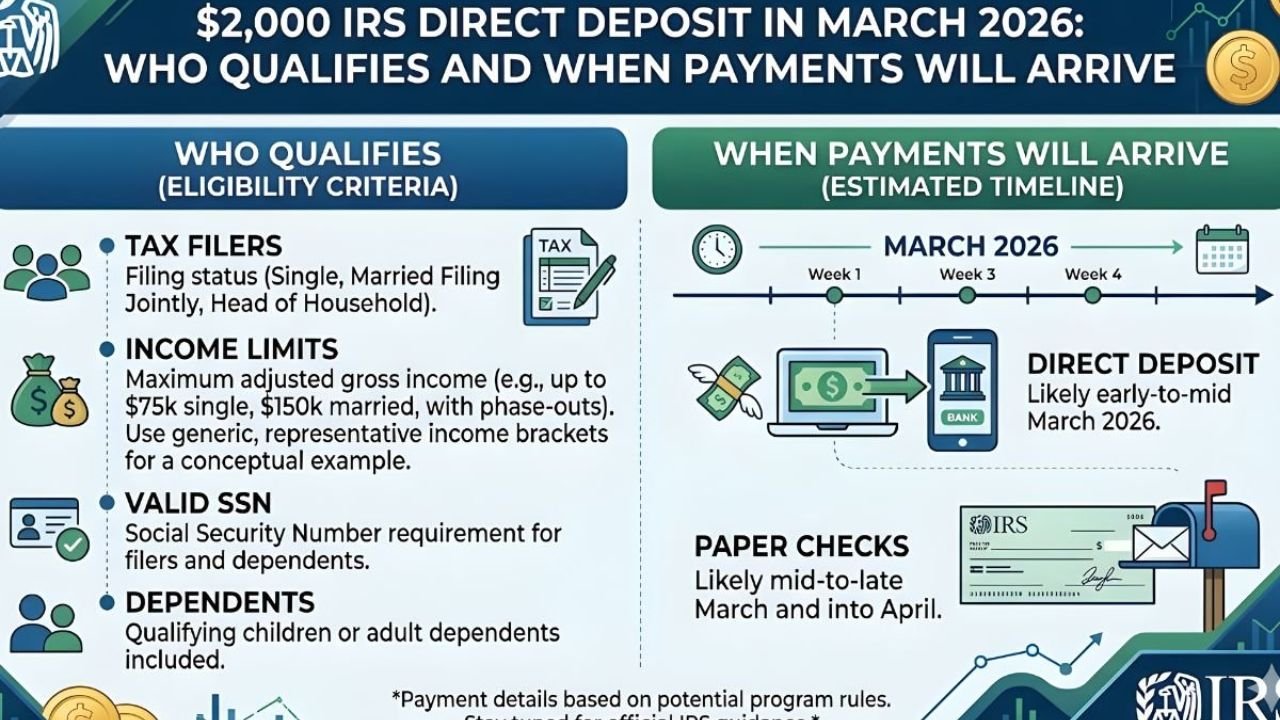
As tax season heats up, many Americans have been buzzing online about a potential $2,000 direct deposit from the IRS in March 2026. Social media posts and headlines suggest a new stimulus payment is on the way—but the truth is more straightforward. The IRS has not announced any universal $2,000 stimulus program for 2026. Most of these deposits are actually routine tax refunds from the 2025 tax year. Understanding the difference can help drivers and families plan their finances without falling for false claims.
Why Some People See $2,000 Deposits
The deposits generating excitement are generally tax refunds, not government stimulus checks. Tax refunds occur when taxpayers overpay their taxes during the year. Employers often withhold slightly more than necessary from paychecks, and the IRS returns the difference after processing tax filings.

Refund amounts vary widely depending on income, deductions, and eligibility for tax credits. Popular credits like the Earned Income Tax Credit (EITC) or the Child Tax Credit can boost refunds to amounts around $2,000, which explains why many people are noticing deposits close to this figure.
Key Factors Affecting Refunds
| Factor | Impact on Refund |
|---|---|
| Income Level | Determines tax bracket and overall liability. |
| Withholding Amount | Overpaid taxes increase refund size. |
| Tax Credits | Credits like EITC and Child Tax Credit can add significantly to refunds. |
| Filing Accuracy | Errors or missing information can delay processing. |
Typical IRS Refund Timeline
For taxpayers who file electronically and opt for direct deposit, refunds usually appear within about three weeks. Returns claiming credits such as EITC or Child Tax Credit may take longer due to additional verification to prevent fraud. Those who submitted returns in late February can generally expect deposits in mid-March or shortly thereafter.
Checking Your Refund Safely
The IRS provides a secure tool called “Where’s My Refund?” which allows taxpayers to track the status of their refund. This is the safest way to confirm when a deposit will hit your account, avoiding misinformation from unofficial sources.
Avoiding Scams

Reports of a $2,000 stimulus payment have also attracted fraudsters. Fake emails, text messages, or social media posts may claim to help you access the deposit, often requesting personal information or fees. The IRS never initiates contact through unsolicited messages. If you receive suspicious communications, ignore them and use official IRS channels for verification.
What This Means for Families and Daily Drivers
Understanding these deposits is particularly relevant for families and daily drivers who budget around expected tax refunds. A $2,000 refund can provide flexibility for vehicle maintenance, insurance, or even fuel costs. Knowing the funds are from tax overpayment—not a new stimulus—helps plan realistic spending and avoids surprises.
Summary Table: IRS Deposit vs. Stimulus
| Payment Type | Description | Expected Timing |
|---|---|---|
| Tax Refund | Return of overpaid taxes, influenced by income and credits | 3 weeks on average for e-filed direct deposit |
| Stimulus Payment | Government-issued, requires Congressional approval | Not currently approved for 2026 |
Conclusion
While $2,000 deposits are appearing in bank accounts, they are almost entirely tax refunds from the 2025 tax year. No new nationwide stimulus program has been authorized. By relying on official IRS tools and understanding how refunds work, taxpayers—including families and daily commuters—can manage their finances confidently and avoid falling for misleading claims.