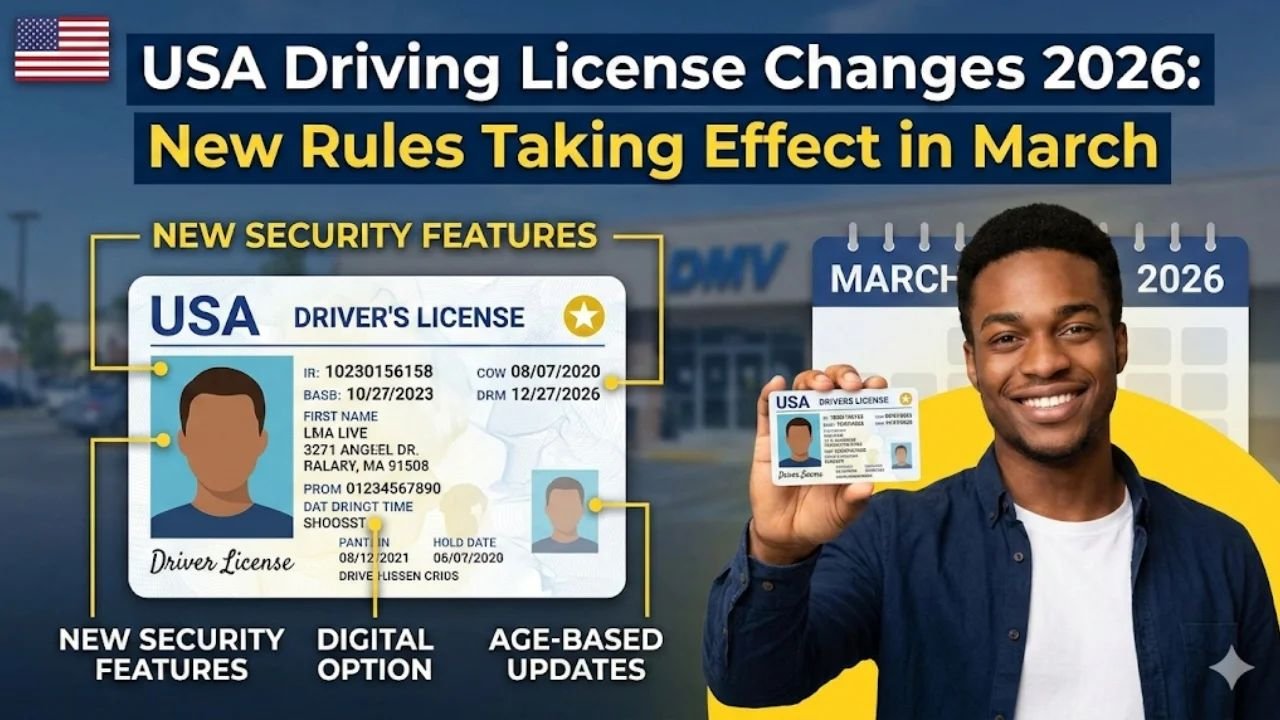
Major updates to U.S. driver licensing rules take effect in March 2026, aiming to improve road safety, protect older drivers, and strengthen federal and state enforcement. From enhanced REAL ID requirements to senior driver assessments and new technology-driven checks, motorists across the country will need to adapt to avoid fines and delays.
These changes are designed to streamline compliance while increasing safety for all road users. Understanding what’s required can help drivers stay ahead of the new rules, minimize inconvenience, and ensure smooth travel.
REAL ID Enforcement Strengthens

The REAL ID Act, originally introduced in 2005, reaches full enforcement in 2026. All domestic air travelers and those accessing federal buildings or military installations must carry a REAL ID-compliant license marked with a star.
Starting February 2026, the TSA will charge a $45 fee for non-compliant IDs and may require additional screening, particularly affecting travelers during peak March periods. States like Texas and California have simplified the application process, though backlogs remain. Travelers are advised to renew early to avoid airport delays, which can exceed 30 minutes for non-compliant IDs.
Senior Driver Safety Updates
New federal guidelines target drivers aged 70 and above through the U.S. Department of Transportation’s Senior Driver Safety Framework. Requirements focus on vision, reaction time, and cognitive assessments to ensure older motorists remain capable behind the wheel. Renewal intervals are shortened to detect health changes earlier:
| Age Group | Renewal Frequency | Key Assessments |
|---|---|---|
| 65-69 | Every 4–6 years | Vision only if needed |
| 70-74 | Every 4 years | Vision, reaction time |
| 75+ | Every 2 years | Vision, cognitive review, medical assessment |

These measures aim to reduce age-related accidents while allowing seniors to maintain driving independence. Road tests are not generally required; family support and routine DMV screenings help ensure compliance.
Technology and Enforcement Innovations
March 2026 also introduces widespread technology-driven enforcement:
- Automated cameras detect cell-phone use, speed violations, and insurance compliance.
- Point-to-point speed monitoring reduces excessive speeding in urban areas.
- Emissions checks target older vehicles, with repair requirements or clean-air fees to reduce pollution.
Fines range from $300 to $1,000 per violation, escalating for repeat offenses. These technologies have already contributed to safer streets in pilot programs, reducing accidents by up to 30% in monitored zones.
Step-by-Step Compliance

Drivers can prepare for the new rules by following these steps:
- Check your license for the REAL ID star. If missing, gather a birth certificate, Social Security card, and two proof-of-residency documents to renew at the DMV.
- Seniors schedule health screenings for vision, reaction, and cognitive assessments, providing medical documentation as needed.
- Adopt safe habits such as using ADAS-equipped vehicles and hands-free systems.
- Plan DMV visits during non-peak hours to avoid long waits. Fees typically range from $20–$50, with optional safety courses around $100.
State-specific variations apply—for example, Florida emphasizes medical reports, while Illinois includes road-sign quizzes.
Impact on Daily Drivers
These updates aim to create safer U.S. roads while fostering responsible driving. Young drivers benefit from technology enforcement and increased awareness, while seniors can maintain independence with proper screening. Drivers who comply avoid penalties and contribute to a nationwide effort to reduce accidents and improve traffic safety.
FAQs
Q: When does REAL ID become mandatory?
A: Full enforcement began in May 2025, with non-compliant travelers paying $45 from February 2026.
Q: Are seniors required to take road tests?
A: No, only vision, reaction, and cognitive assessments are needed during renewal.
Q: What are fines for technology violations?
A: $300–$1,000 per offense, increasing with repeated violations.
By updating licenses, adhering to health checks, and following tech-based enforcement rules, drivers can navigate the new 2026 regulations safely and efficiently.